
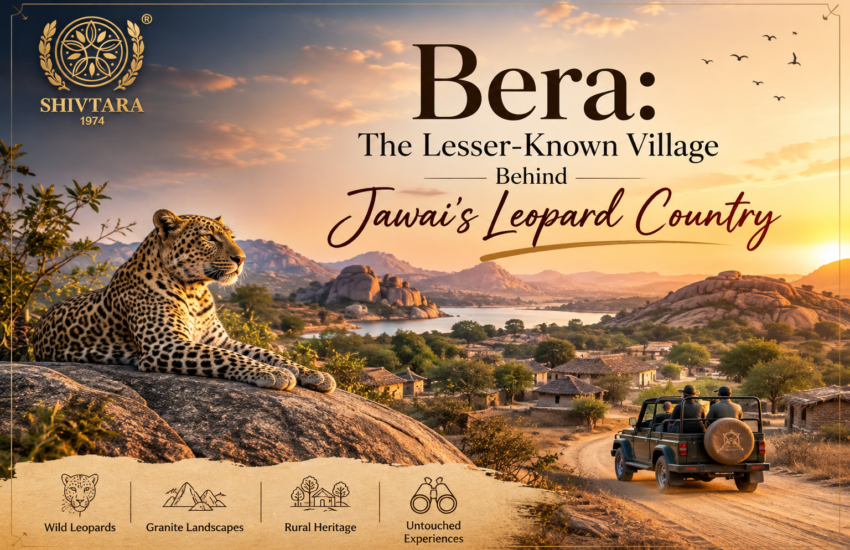
When people hear about Jawai in Rajasthan, the first image that comes to mind is usually a leopard resting on a rocky hill or quietly moving through the granite landscape. Jawai has become increasingly popular among wildlife enthusiasts because of its remarkable leopard sightings and dramatic scenery.
But beyond the famous safari experience lies a quieter side of the region that many visitors overlook: Bera.
Located in the rugged landscape of the Pali district, Bera is a small rural settlement surrounded by granite hills, open scrublands, traditional villages, and seasonal water bodies. While the area is now associated with leopard tourism, its identity goes much deeper. Bera offers travelers an opportunity to see how wildlife, local communities, and traditional rural life have existed alongside each other for generations.
Where Is Bera?
Bera is situated in the Jawai region of Rajasthan, surrounded by the distinctive granite hills that define the landscape. Unlike the heavily photographed tourist destinations of Rajasthan, Bera retains a relatively peaceful and rural character.
The journey to Bera itself is part of the experience. As you travel through the countryside, the landscape gradually changes from busy roads and towns to dry hills, scattered vegetation, grazing livestock, and small settlements.
The rocky terrain may initially appear harsh, but it supports a surprising variety of wildlife. Most importantly, the numerous caves and crevices among the granite formations provide natural shelter for leopards.
Why Is Bera Famous for Leopards?
Bera’s connection with leopards is one of the most fascinating aspects of the region.
Unlike many wildlife destinations where animals are found inside large protected forests, the leopards around Bera live in a landscape that is closely connected with human habitation. They use rocky hills and caves as safe resting places and often move through the surrounding scrubland in search of prey.
This unusual coexistence between people and wildlife has made Bera one of the most interesting leopard-viewing destinations in Rajasthan.
The local environment plays an important role. The granite formations create natural shelters, while the surrounding countryside provides suitable hunting grounds. Water sources also attract different species of animals, creating an ecosystem that supports the leopard population.
For visitors, this means that a safari around Bera is not simply about entering a forest and searching for wildlife. It is about understanding an entire landscape.
The Granite Hills That Shape Bera
One of the most striking features of Bera is its granite terrain.
Huge rocky formations rise from the otherwise dry landscape, creating a scene that looks very different from the golden dunes commonly associated with Rajasthan. These ancient rocks are more than just a beautiful backdrop. They are an essential part of the local ecosystem.
Leopards use caves and rocky shelters to rest during the day, particularly during the hotter hours. From elevated rocks, they can also observe the surrounding landscape.
For photographers, these hills create dramatic opportunities, especially during the early morning and late afternoon when the changing sunlight highlights the textures of the rocks.
The combination of rugged hills, dry vegetation, grazing animals, and wildlife gives Bera a distinct visual identity that is difficult to find elsewhere in Rajasthan.
More Than Just a Leopard Safari
A visit to Bera should not be limited to searching for leopards.
The surrounding villages provide an opportunity to experience a quieter and more authentic side of Rajasthan. Traditional homes, livestock, agricultural activities, and local customs remain an important part of everyday life.
The region is also associated with the Rabari pastoral community, whose traditional lifestyle has long been connected with livestock herding. Their presence adds another layer to the story of Bera.
One of the most interesting aspects of the region is how closely daily life and the natural environment are connected. While visitors may come hoping to photograph a leopard, they often leave with a deeper appreciation for the people and traditions that form the cultural landscape of Jawai.
Best Things to Experience Around Bera
There are several ways to explore Bera beyond simply taking a safari.
1. Go on a Leopard Safari
Of course, leopard safari remains one of the main reasons people visit Bera. Early morning and evening excursions offer opportunities to explore the rocky terrain and observe wildlife in its natural surroundings.
However, sightings can never be guaranteed. That uncertainty is part of what makes wildlife experiences exciting. A good safari is not only about seeing a leopard but also about observing birds, antelope, reptiles, and other animals along the way.
2. Explore the Local Villages
Take some time to move beyond the safari routes and discover the nearby villages. Walking through rural settlements can provide a completely different perspective of Rajasthan.
Traditional architecture, village life, livestock, and local craftsmanship offer experiences that are often missed when travelers focus only on major attractions.
3. Experience the Landscape at Sunrise and Sunset
The granite hills around Bera become especially beautiful during the golden hours.
At sunrise, the landscape slowly comes alive as the first rays of sunlight reach the rocks. In the evening, the hills take on warm earthy tones as the sun disappears behind the horizon.
Even without a leopard sighting, these moments can become some of the most memorable parts of a Bera trip.
4. Spend a Night in the Wilderness
Staying close to nature allows you to experience Bera at a slower pace. Instead of rushing through the region on a day trip, travelers can spend time appreciating the silence, landscape, local food, and night sky.
For those looking for a comfortable base while exploring the region, a Luxury Stay in Jawai can combine the character of the wilderness with a more relaxing and comfortable experience.
Best Time to Visit Bera
The cooler months are generally the most comfortable time to explore Bera. From around October through March, daytime temperatures are more pleasant for outdoor activities and safari excursions.
The winter months can also provide excellent conditions for photography, with softer light and comfortable temperatures during morning and evening safaris.
Summer can be considerably hotter, but wildlife activity around water sources can sometimes create interesting opportunities for experienced wildlife observers. Regardless of the season, it is important to be prepared for Rajasthan’s dry climate and changing temperatures between day and night.
Why Bera Deserves More Attention
Bera may not have the same level of recognition as Rajasthan’s major tourist destinations, but that is precisely what makes it appealing.
There are no grand forts dominating the skyline or crowded tourist markets at every turn. Instead, Bera offers something much quieter: rugged landscapes, intimate wildlife encounters, traditional villages, and a rare example of coexistence between humans and predators.
The region encourages travelers to slow down and look beyond the obvious.
A leopard sitting silently on a granite outcrop is certainly an unforgettable sight. But so is watching shepherds move their livestock through the hills, seeing sunlight spread across the rocky landscape, or sitting quietly as the countryside changes color at sunset.
Discover the Lesser-Known Side of Rajasthan
Bera represents a side of Rajasthan that many travelers never get to see.
It is wild without being completely remote, traditional without feeling frozen in time, and beautiful without relying on the grand architecture for which Rajasthan is famous.
If Jawai is known for its leopards, Bera is where you can begin to understand the landscape and communities behind the wildlife story.
So, on your next Rajasthan journey, consider looking beyond the usual destinations. Instead of simply asking where you can see a leopard, ask what makes this place possible in the first place.
The answer lies in Bera’s granite hills, its wildlife, its villages, and the people who have shared this landscape with nature for generations.

