
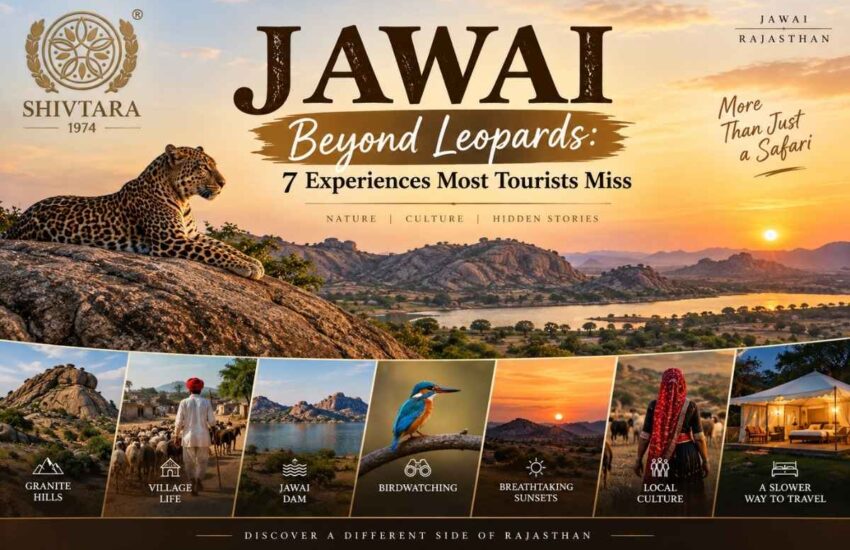
When people think of Jawai, Rajasthan, they usually think of one thing: leopards.
And understandably so. Jawai has become one of Rajasthan’s most fascinating wildlife destinations, known for its rocky granite hills, open landscapes, and the remarkable presence of leopards living close to local communities. For many visitors, a leopard safari is the highlight of the trip.
But Jawai is much more than a place to spot a leopard.
Beyond the safari routes are quiet villages, ancient-looking granite formations, pastoral traditions, birdlife, dramatic sunsets, and a slower way of experiencing Rajasthan. In fact, some of the most memorable experiences here have little to do with whether you see a leopard or not.
If you are planning a Jawai Rajasthan trip, here are seven experiences that many tourists overlook.
1. Explore Jawai’s Granite Hills
The first thing you notice about Jawai is its unusual landscape.
Large granite formations rise dramatically from the surrounding dry countryside, creating a landscape that feels completely different from the forts, palaces, and desert scenery commonly associated with Rajasthan.
These rocky hills are not simply beautiful scenery. They are an important part of the region’s wildlife ecosystem. Natural caves and crevices provide shelter for leopards, while the surrounding scrublands support prey species and other wildlife.
Instead of viewing the hills only from a safari vehicle, spend some time appreciating them on their own. Early morning light creates soft shadows across the rocks, while sunset turns the landscape into shades of gold and orange.
For photographers, these granite formations can be just as rewarding as photographing wildlife.
2. Discover the Villages Around Jawai
One of the easiest ways to experience the authentic side of the region is to look beyond the safari tracks.
The villages around Jawai offer a glimpse into everyday rural Rajasthan. You may see traditional homes, livestock, agricultural activities, children heading to school, or shepherds moving their animals through the landscape.
This is a very different experience from visiting Rajasthan’s major tourist cities.
The region is particularly associated with the Rabari pastoral community, whose traditional lifestyle has been closely connected with livestock and the surrounding landscape for generations.
A village visit can help explain something that photographs of Jawai’s leopards often fail to show: wildlife here exists within a living cultural landscape.
3. Experience Jawai Dam Beyond the Safari
Jawai Dam is another part of the region that deserves more attention.
The reservoir and surrounding wetlands create an important water source in an otherwise dry landscape. This makes the area particularly interesting for nature lovers and birdwatchers.
Depending on the season, visitors may encounter a variety of resident and migratory birds around the water. Watching birds against the backdrop of Jawai’s granite hills can be a surprisingly peaceful experience.
Rather than rushing from one leopard location to another, consider spending some time near the water and simply observing the landscape.
Sometimes, the quieter moments become the most memorable part of a journey.
4. Go Birdwatching in Jawai
Jawai’s wildlife story isn’t limited to leopards.
The combination of rocky terrain, scrubland, villages, and water bodies creates habitats for a wide range of bird species. For visitors interested in nature and photography, birdwatching can add another dimension to a Jawai wildlife safari.
The best part is that you don’t necessarily need to dedicate an entire day to it.
Early mornings are particularly enjoyable because the landscape is cooler and wildlife activity is often higher. Carrying binoculars and a camera can turn an ordinary drive through the countryside into an unexpected wildlife experience.
If your idea of wildlife travel includes more than the Big Five-style checklist, Jawai has plenty to offer.
5. Watch a Jawai Sunset
This sounds simple, but it is one of the experiences visitors often underestimate.
Jawai’s open landscape and rocky hills create excellent viewpoints for watching the sun go down. As the light changes, the granite formations become increasingly dramatic, while the surrounding countryside takes on warm golden tones.
You don’t need an elaborate activity.
Find a peaceful viewpoint, sit down, and watch the landscape change.
After spending a day on safari, a quiet sunset can be the perfect way to slow down. It also gives photographers an opportunity to capture Jawai without making wildlife the main subject.
For travelers looking for an offbeat Rajasthan experience, this is exactly the kind of simple moment that makes Jawai different.
6. Experience Local Life, Not Just Local Wildlife
A common mistake when visiting wildlife destinations is treating the local community as background scenery.
Jawai offers an opportunity to do something different.
The relationship between people, livestock, and wildlife is one of the most fascinating aspects of the region. Leopards may inhabit the rocky hills, while shepherds and their animals move through the same broader landscape.
Understanding this relationship makes a leopard sighting more meaningful.
Instead of simply asking, “Did I see a leopard?”, you can begin asking, “How does this landscape support both wildlife and people?”
That shift in perspective can transform a standard safari into a much richer travel experience.
7. Slow Down and Stay Close to Nature
Perhaps the most underrated Jawai experience is simply staying long enough to appreciate it.
Many travelers plan a quick visit focused entirely around a safari. If they see a leopard, the trip is considered successful. If they don’t, they may feel disappointed.
That’s the wrong way to approach Jawai.
Wildlife sightings are never completely predictable. Leopards are wild animals, and there are no guarantees about when or where they will appear.
Instead, give yourself time to experience the entire destination.
Wake up early. Watch the landscape change. Enjoy local food. Visit nearby villages. Spend time around the hills and water. Sit outside after sunset and look at the night sky.
Choosing a comfortable base can make this slower style of travel much easier. A Luxury Stay in Jawai can give you a comfortable place to return to after exploring the rugged countryside.
When Is the Best Time to Visit Jawai?
The best time to visit Jawai Rajasthan depends on what you want from your trip.
The cooler months are generally comfortable for outdoor activities, especially early-morning and evening safari excursions. Winter also provides pleasant conditions for exploring villages, photographing landscapes, and spending time outdoors.
Summer can be considerably hotter, but the dry landscape and concentration of wildlife around available water sources can create interesting conditions for wildlife enthusiasts.
Rather than choosing a season only because you want the highest possible chance of seeing a leopard, think about the overall experience you want.
Jawai Is More Than a Leopard Destination
There is no doubt that the Jawai leopard safari is one of Rajasthan’s most unusual wildlife experiences. But focusing exclusively on leopards means missing much of what makes the destination special.
Its identity comes from the combination of wildlife and landscape.
It is the granite hills where leopards find shelter. It is the water of Jawai Dam. It is the villages scattered across the countryside. It is the Rabari pastoral culture. It is the birds around the wetlands. It is the golden light over the rocks at sunset.
And it is the feeling of being somewhere that still moves at its own pace.
For travelers searching for Jawai tourism beyond the usual itinerary, these experiences offer a better way to understand the region.
So, when you plan your next trip, don’t make your entire journey about finding a leopard.
Come for the leopard, but stay for Jawai.

