
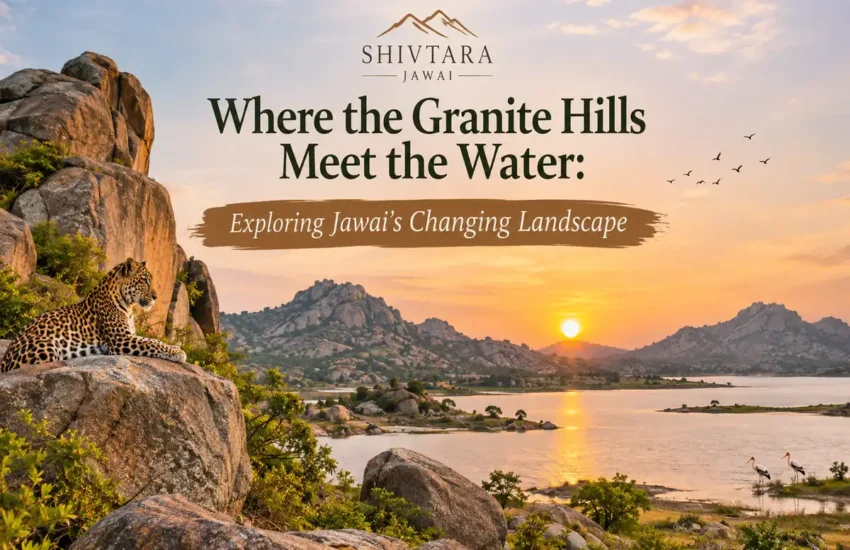
Rajasthan is often imagined as a land of golden deserts, historic forts, and dry landscapes. Yet, in the southern part of the state, Jawai presents a different picture. Here, enormous granite hills rise above open countryside, while a reservoir, seasonal wetlands, and rural settlements create an environment that changes throughout the year.
Located in the Pali district of Rajasthan, Jawai is best known for its leopard population. However, the region’s natural beauty extends far beyond wildlife safaris. Its distinctive combination of rocky terrain and water bodies supports different habitats, attracts birdlife, and influences the everyday lives of nearby communities.
For travellers who want to understand Jawai beyond its popular attractions, exploring how the landscape changes with the seasons can make a visit much more meaningful.
What Makes Jawai’s Landscape So Different?
One of the most remarkable features of Jawai is the contrast between its granite hills and surrounding water bodies.
Unlike the dense forests associated with many Indian wildlife destinations, Jawai has exposed rocky formations, open scrubland, agricultural fields, and the Jawai reservoir.
The granite hills contain natural caves, crevices, and elevated surfaces that provide shelter for leopards and other wildlife.
Meanwhile, the reservoir and surrounding wetlands create habitats for aquatic birds and other animals.
These different environments exist within the same broader landscape, allowing travellers to experience rocky terrain, water bodies, and rural countryside during a single journey.
Understanding this geographical diversity is essential to appreciating what makes Jawai special.
The Granite Hills: Jawai’s Most Recognisable Natural Feature
Jawai’s granite formations are among the region’s most distinctive attractions.
Over geological time, weathering and erosion have shaped the exposed rock into rounded hills, smooth surfaces, and natural cavities.
These formations are not merely scenic backgrounds for photographs. They are important parts of the local ecosystem.
Leopards use rocky shelters and crevices for resting and protection, while other animals occupy different parts of the surrounding habitat.
For visitors, the granite hills offer excellent opportunities for landscape photography, particularly during sunrise and sunset.
As sunlight changes throughout the day, the rocks develop different shades of grey, brown, and gold.
However, travellers should avoid approaching caves or climbing unfamiliar formations without appropriate local guidance.
Jawai Bandh: The Water That Shapes the Region
Jawai Bandh is one of the most important geographical features of the area.
The reservoir was created by constructing a dam across the Jawai River and plays a significant role in regional water management.
Beyond its practical importance, the reservoir contributes to the surrounding environment by supporting wetland habitats and attracting birdlife.
Its water levels vary according to rainfall, seasonal conditions, and water management requirements.
During periods of higher water availability, the reservoir can create expansive views of water against the surrounding hills.
When levels fall, exposed shorelines and changing wetland conditions alter the appearance of the landscape.
For travellers, these seasonal variations mean that Jawai may look quite different depending on the time of year.
How the Monsoon Transforms Jawai
The monsoon brings one of the most noticeable changes to Jawai’s environment.
Rainfall can encourage fresh vegetation across the countryside, making parts of the landscape appear greener than during the dry season.
Seasonal streams and low-lying areas may hold water, while agricultural fields reflect the changing growing conditions.
The contrast between wet granite surfaces, vegetation, and cloudy skies creates interesting opportunities for landscape photography.
However, monsoon travel also requires additional planning.
Rainfall may affect rural roads, access to certain areas, and safari arrangements.
Visitors should confirm current conditions with local operators rather than assuming all routes will remain accessible.
Winter: A Season for Wildlife and Birdwatching
From approximately October to March, Jawai generally experiences more comfortable conditions for outdoor exploration.
Cooler mornings and pleasant daytime temperatures make wildlife excursions, photography, and birdwatching easier for many travellers.
The reservoir and nearby wetlands can attract migratory birds during suitable seasonal conditions.
Visitors may observe herons, egrets, kingfishers, and other water-associated species.
Birdwatching requires patience, and sightings depend on habitat conditions, migration patterns, and the time of day.
Winter is also a suitable period for exploring Jawai’s granite landscape, although early morning safari drives can be cold.
Travellers should carry warm layers when planning sunrise activities.
Summer: Understanding Jawai’s Dry Landscape
Summer reveals another side of Jawai.
As temperatures rise, vegetation may become drier, and available water becomes increasingly important for wildlife and rural communities.
The granite hills remain visually striking, but outdoor activities can become uncomfortable during the hottest hours.
Early morning and late afternoon are generally more suitable for nature excursions.
Wildlife behaviour may also change in response to temperature and water availability, although sightings cannot be predicted.
For photographers, the dry season offers opportunities to capture the contrast between exposed rock formations and the surrounding countryside.
Adequate drinking water, sun protection, and appropriate clothing are essential during summer visits.
How Water and Rocky Terrain Support Jawai’s Wildlife
Jawai’s natural environment is shaped by the relationship between different habitats.
The granite hills provide shelter for leopards, while scrubland, agricultural areas, and other parts of the landscape support potential prey and additional wildlife.
The reservoir and wetlands provide habitats for birds and aquatic animals, including crocodiles.
These environments are connected through the movement of animals, seasonal water availability, and changes in vegetation.
This makes Jawai more than a destination for observing one species.
A thoughtful wildlife experience can include learning about habitat diversity, animal behaviour, and the importance of maintaining healthy ecosystems.
Visitors should always observe wildlife from safe distances and follow responsible guiding practices.
The Connection Between Jawai’s Landscape and Village Life
Jawai’s changing environment also influences the people who live there.
The surrounding villages include communities involved in agriculture, livestock management, and other rural occupations.
The Rabari community, traditionally associated with pastoral livelihoods, forms an important part of the region’s cultural heritage.
Rainfall, grazing conditions, and water availability can influence agricultural and livestock activities.
This connection between the natural environment and everyday life adds another dimension to Jawai’s identity.
Travellers interested in understanding rural Rajasthan can arrange respectful village experiences through knowledgeable local guides.
Such visits should prioritise cultural understanding and respect for residents’ privacy.
Best Places to Appreciate Jawai’s Changing Scenery
Rather than concentrating on a single attraction, visitors can explore different types of landscapes across the region.
Granite Hill Viewpoints
Suitable viewpoints around the rocky hills provide opportunities to observe the unusual formations and changing sunlight.
Visit only locations where access is permitted and safe.
Jawai Reservoir Surroundings
Appropriate viewing areas around the reservoir offer opportunities for landscape photography and birdwatching.
Access conditions vary, and visitors should avoid unsafe shorelines and crocodile habitats.
Rural Roads and Agricultural Landscapes
The countryside around Jawai reveals seasonal changes in vegetation, agricultural activity, and village life.
Travelling with a local guide can help visitors understand these changes without entering private land.
Where to Stay While Exploring Jawai
Accommodation location can make a difference when planning nature-focused activities.
Travellers looking for the Best Resort in Jawai for their preferences should consider proximity to safari areas, road accessibility, dining facilities, and the availability of local guidance.
Because Jawai’s attractions are spread across a wider rural region, planning daily excursions around your accommodation can reduce unnecessary travel.
Visitors seeking additional comfort can explore a Luxury Resort in Jawai when organising a longer nature-focused holiday.
Before booking, confirm available experiences and whether safari arrangements and transportation involve additional charges.
A Two-Day Itinerary to Experience Jawai’s Landscapes
A short visit can introduce travellers to several aspects of Jawai’s natural environment.
Day 1: Granite Hills and Wildlife
Arrive in Jawai, settle into your accommodation, and spend the afternoon exploring the rocky landscape through a responsibly organised wildlife safari.
End the day at a suitable sunset viewpoint.
Day 2: Water, Birdlife and Rural Countryside
Begin the morning with birdwatching around an appropriate reservoir viewing area.
After breakfast, explore the countryside or join a respectfully arranged village experience.
Spend the afternoon appreciating the surrounding landscape before departing.
Travellers interested in photography or wildlife observation may benefit from staying an additional night.
Responsible Travel in Jawai’s Natural Environment
Jawai’s growing popularity makes responsible tourism particularly important.
Wildlife should never be chased, surrounded, or disturbed for photographs.
Visitors should avoid entering restricted areas, approaching leopard shelters, or exploring unsafe rocky terrain independently.
Near the reservoir, maintain a safe distance from the water and follow local guidance regarding crocodile habitats.
Avoid littering, disturbing birds, or damaging vegetation.
Supporting responsible guides and respecting village communities helps protect the natural and cultural environment that attracts travellers to Jawai.
Final Thoughts
Jawai’s beauty lies in the relationship between its granite hills, water bodies, wildlife, and rural communities.
The landscape changes throughout the year, from greener monsoon surroundings to comfortable winter mornings and the exposed textures of the dry season.
Each period offers a different perspective on the same remarkable region.
For travellers planning a visit, understanding these seasonal changes can help them choose suitable activities, prepare for local conditions, and appreciate Jawai beyond leopard sightings.
Rather than treating the destination as a single wildlife attraction, explore it as a living landscape where geology, water, nature, and human life remain closely connected.
That broader perspective is what makes a journey through Jawai truly memorable.

