
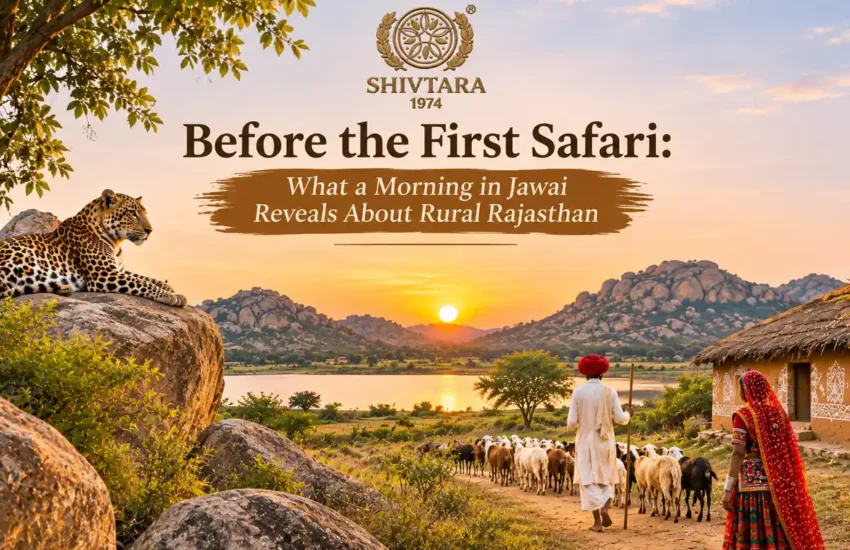
Most travellers arrive in Jawai with one particular experience in mind: a leopard safari. The excitement of spotting a leopard among the granite hills often becomes the highlight of a visit. However, some of Jawai’s most interesting experiences begin before the safari vehicle even starts its journey.
In the early morning, the landscape reveals a quieter side of Rajasthan. The granite hills gradually emerge from the darkness, birds become active around the countryside, and villages begin their daily routines. For travellers willing to wake up early, these ordinary moments offer a deeper understanding of the region.
Located in Rajasthan’s Pali district, Jawai is more than a wildlife destination. It is a living rural landscape where nature, agriculture, pastoral traditions, and wildlife share the same environment.
1. The First Light Over Jawai’s Granite Hills
Before sunrise, Jawai’s granite formations appear as dark silhouettes against the gradually brightening sky.
As daylight increases, the rocks reveal their natural textures, rounded surfaces, and distinctive shapes. These formations are among the most recognisable features of the region.
The granite hills also provide natural shelter for leopards, which use rocky crevices and caves for resting.
However, observing the landscape itself can be just as rewarding as searching for wildlife.
For photographers, the changing morning light creates opportunities to capture the hills without the harsh shadows associated with midday.
Travellers should choose safe, accessible viewpoints and avoid approaching wildlife shelters or climbing unfamiliar rocks.
2. Listening to Jawai Before the Day Begins
One of the simplest ways to experience Jawai is to spend a few minutes listening to the surroundings.
Early mornings may bring birdsong, the sounds of livestock, and everyday activity from nearby settlements.
Unlike busy urban destinations, many parts of Jawai offer relatively quiet surroundings, although conditions vary depending on location and local activity.
This makes the morning an excellent time for nature observation.
Instead of immediately reaching for a camera, spend a few moments noticing the sounds and movements around you.
Such experiences can help travellers appreciate the destination beyond its famous leopard sightings.
3. How Jawai’s Villages Begin Their Day
Morning is an important part of daily life in Jawai’s villages.
Agricultural work, livestock care, household activities, and local travel often begin early, particularly during warmer months.
The villages surrounding Jawai reflect the working countryside of Rajasthan rather than a landscape created solely for tourism.
Travellers may notice farmers preparing for the day or livestock moving through designated grazing areas.
These activities are part of people’s livelihoods and should be observed respectfully.
Avoid interrupting work, entering private property, or photographing residents without permission.
Understanding these routines offers a more realistic perspective on rural Rajasthan than treating village life as a sightseeing attraction.
4. Understanding Rabari Pastoral Traditions
The Rabari community forms an important part of the cultural heritage of the wider Jawai region.
Traditionally associated with livestock herding, Rabari families have developed knowledge of animal care, grazing conditions, and seasonal changes in the landscape.
Morning activities may involve tending livestock and preparing for daily work, although routines differ between households.
Not every Rabari family follows the same occupation today. Education, changing economic opportunities, and modern livelihoods have influenced community life.
For visitors, learning about pastoral traditions through knowledgeable local guides can provide valuable cultural context.
Respectful conversations, when welcomed, are more meaningful than treating traditional clothing or occupations as photographic attractions.
5. Birdwatching in the Morning Light
Jawai’s reservoir, agricultural surroundings, and seasonal wetlands support different bird species.
Early morning can be a rewarding time for birdwatching because many birds are active during the cooler hours.
Depending on the season and habitat conditions, visitors may observe herons, egrets, kingfishers, and other resident or migratory birds.
The landscape offers opportunities to watch birds near water bodies and across open countryside.
Carry binoculars if possible and maintain a respectful distance from feeding or nesting areas.
Birdwatching is also a useful alternative for travellers who want to enjoy Jawai’s wildlife without focusing entirely on leopards.
6. What the Morning Reveals About Human-Wildlife Coexistence
Jawai is often recognised for the relationship between leopards and local communities.
The granite hills provide shelter for wildlife, while nearby villages and grazing areas support rural livelihoods.
This creates a landscape where people, livestock, and wild animals occupy overlapping environments.
However, coexistence does not mean that conflicts never occur.
Livestock predation and other challenges can affect communities living near leopard habitats.
Understanding these realities helps visitors appreciate the importance of responsible wildlife tourism and local conservation efforts.
A knowledgeable guide can explain the region’s ecology without disturbing animals or exaggerating the relationship between wildlife and people.
7. Enjoying a Peaceful Morning at Your Accommodation
Not every morning in Jawai needs to begin with a scheduled activity.
Sometimes, enjoying the landscape from your accommodation can be equally memorable.
Travellers choosing the Best Resort in Jawai for their preferences should consider the surrounding environment, accessibility, comfort, and availability of guided activities.
A relaxed breakfast, time outdoors, or a quiet moment observing the hills can become an important part of the experience.
Visitors who prefer additional comfort can explore a Luxury Resort in Jawai when planning their stay.
Allowing time between activities makes it easier to appreciate the destination without feeling rushed.
8. Preparing for Your First Jawai Leopard Safari
After enjoying the early morning surroundings, travellers can prepare for a wildlife safari.
Morning safaris provide opportunities to explore Jawai’s rocky landscape and learn about its wildlife habitats.
Leopards may use elevated rocks and natural shelters, but sightings are unpredictable.
An experienced local guide can help visitors understand animal behaviour, identify suitable observation areas, and follow responsible wildlife practices.
Before leaving, carry drinking water, sunscreen, a camera, and appropriate clothing.
Winter mornings can be cold, especially in open vehicles, so warm layers are useful.
Always follow your guide’s instructions and avoid pressuring operators to approach wildlife too closely.
9. Why Morning Photography Is Special in Jawai
Jawai’s morning light creates a different atmosphere from the warm colours of sunset.
The softer illumination can highlight the granite hills, agricultural fields, and surrounding countryside.
Photographers may find interesting compositions in the relationship between rocky formations and rural landscapes.
However, photography should not interfere with wildlife or community activities.
Avoid using intrusive lighting near animals, approaching nesting sites, or photographing residents without consent.
For travellers interested in landscape photography, spending time at a single suitable viewpoint can produce more meaningful results than rushing between locations.
10. Planning a Morning That Goes Beyond the Safari
A well-planned morning can include several simple experiences without becoming exhausting.
6:00 AM – Watch the Landscape Wake Up
Begin at a safe viewpoint or from your accommodation, depending on the season and sunrise time.
Observe the changing light across the granite hills.
6:30 AM – Enjoy Birdwatching or Nature Observation
Spend time observing birds and the surrounding countryside.
Choose suitable locations with guidance when necessary.
7:30 AM – Learn About Rural Life
If arranged in advance, join a respectful village experience to understand local livelihoods and pastoral traditions.
Alternatively, enjoy a relaxed breakfast before your safari.
8:30 AM – Continue With Your Planned Activities
Depending on your safari operator’s schedule, continue with a wildlife excursion or return to your accommodation.
Safari departure times vary, and many morning drives begin around dawn. Arrange the order of activities accordingly rather than assuming this sample schedule will fit every safari.
Best Time to Experience Jawai’s Early Mornings
October to March is generally comfortable for outdoor exploration.
Winter mornings can be particularly cool, making warm clothing important.
During summer, early morning is often the most practical time for outdoor activities because temperatures rise significantly later in the day.
The monsoon can bring greener surroundings and changing vegetation, although rainfall may affect access to rural roads and viewpoints.
Each season reveals a different aspect of Jawai’s landscape.
Why These Small Experiences Matter
Wildlife safaris often create the most excitement during a Jawai holiday, but the quieter moments can provide a deeper understanding of the region.
Watching the first sunlight reach the granite hills, observing birds, or learning about pastoral livelihoods reveals how the landscape supports different forms of life.
These experiences also encourage travellers to spend more time observing rather than simply moving between attractions.
By appreciating Jawai beyond leopard sightings, visitors can develop a more meaningful connection with its natural and cultural environment.
Final Thoughts
A morning in Jawai offers much more than preparation for a leopard safari.
It reveals a landscape shaped by ancient granite formations, wildlife habitats, agricultural activities, and pastoral traditions.
For travellers interested in discovering rural Rajasthan, these early hours provide an opportunity to experience the region before the day’s main tourist activities begin.
Whether you spend the morning watching birds, appreciating the sunrise, learning about village life, or preparing for a safari, the experience adds depth to your journey.
Sometimes, understanding a destination begins not with its most famous attraction, but with the ordinary moments that reveal how people and nature share the landscape.

