
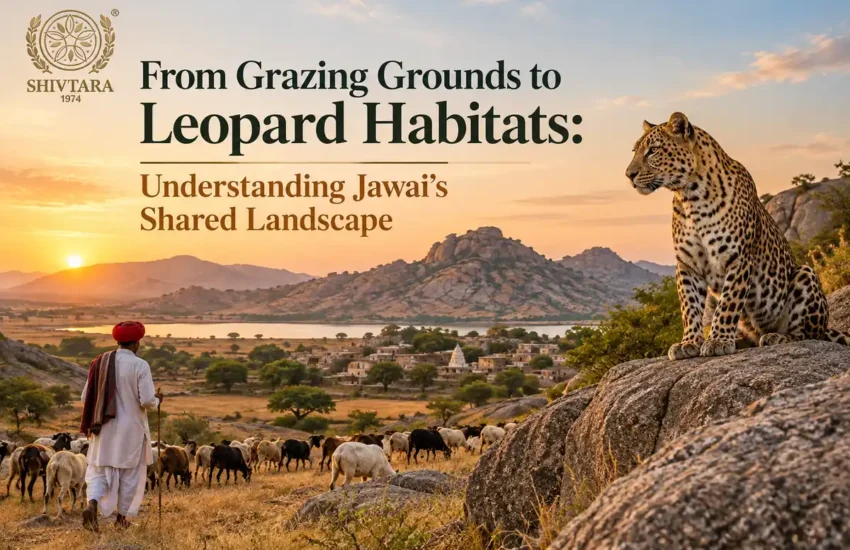
In Rajasthan’s Pali district, Jawai presents a landscape where wildlife and human communities have shared space for generations. Unlike traditional national parks, where wildlife habitats are often separated from surrounding settlements, Jawai is known for its rocky hills, grazing grounds, agricultural fields, villages, and natural water bodies existing within the same geographical setting.
The region is particularly famous for its leopards, which inhabit granite hills and rocky caves close to areas used by local communities. What makes Jawai fascinating is not simply the presence of these predators but the relationship between wildlife, pastoral traditions, and everyday village life.
Understanding this shared landscape offers valuable insights into wildlife conservation, traditional livelihoods, and the challenges of maintaining ecological balance in a changing environment.
Jawai’s Unique Geography Creates a Shared Habitat
Jawai’s landscape differs considerably from the dense forests commonly associated with wildlife safaris in India.
Massive granite formations rise above open countryside, creating rocky shelters, caves, and elevated resting places suitable for leopards. Between these hills lie agricultural fields, grazing areas, seasonal vegetation, and village settlements.
The Jawai Dam and surrounding water bodies further contribute to the region’s ecological diversity by supporting aquatic life, birds, and other wildlife.
These different habitats are interconnected rather than completely separated.
Leopards may use rocky hills for shelter while moving through surrounding areas in search of prey. Livestock herders use nearby grazing grounds, and farmers depend on the same landscape for agricultural activities.
This overlapping use of land makes Jawai an important example of a shared human-wildlife environment.
The Rabari Community and Its Pastoral Traditions
The Rabari community has a long association with pastoral livelihoods in Rajasthan. Traditionally, many Rabari families have depended on livestock rearing, particularly sheep, goats, and camels, although livelihoods and practices vary between households.
In the Jawai region, livestock grazing remains an important part of rural life.
Herders move their animals through available grazing areas, often following seasonal patterns influenced by vegetation, rainfall, and water availability.
Their familiarity with the landscape comes from generations of practical experience.
For visitors, understanding these traditions provides a different perspective on Jawai. The region is not simply a wildlife tourism destination but also a working rural environment where local livelihoods depend on natural resources.
Respecting this relationship is essential when exploring villages and surrounding grazing areas.
Why Leopards Thrive Among Jawai’s Granite Hills
Leopards are highly adaptable predators capable of surviving in different habitats, including forests, rocky terrain, scrublands, and landscapes influenced by human activity.
Jawai’s granite hills provide several advantages for these animals.
Rocky caves and crevices offer shelter, while elevated surfaces provide resting locations and opportunities to observe surrounding areas.
The combination of natural cover, available prey, and relatively accessible movement routes helps explain why leopards use this landscape.
Unlike wildlife restricted to enclosed reserves, Jawai’s leopards move through a broader environment where human activities are also present.
However, their presence does not mean that every encounter is predictable or safe. Leopards remain wild predators, and sightings depend on individual animal movements, environmental conditions, and other factors.
Understanding Human-Leopard Coexistence in Jawai
One of Jawai’s most discussed characteristics is the relationship between local communities and leopards.
The region is frequently highlighted as an example of coexistence because people and large carnivores have occupied overlapping spaces over long periods.
Local religious beliefs, cultural traditions, and attitudes toward wildlife can influence how communities respond to leopard presence.
However, coexistence should not be confused with an absence of challenges.
Livestock predation can create economic losses for pastoral families, and encounters with large carnivores require appropriate precautions.
Successful coexistence depends on several factors, including community tolerance, livestock protection, awareness, and effective responses to potential conflict.
Recognizing these realities provides a more accurate understanding of Jawai than presenting its human-leopard relationship as entirely effortless.
How Grazing Grounds Influence the Ecosystem
Grazing lands support more than livestock.
They form part of a wider ecological network that includes grasses, shrubs, insects, birds, herbivores, and predators.
Livestock grazing can influence vegetation structure, plant regeneration, and habitat availability for different species.
Moderate grazing may maintain certain open habitats, while excessive grazing can reduce vegetation cover and contribute to soil degradation.
The effects depend on grazing intensity, rainfall, vegetation type, and land management practices.
In Jawai, understanding these relationships is particularly important because wildlife habitats and pastoral activities overlap.
Maintaining healthy grazing grounds benefits rural livelihoods while helping preserve the ecological functions of the surrounding landscape.
What Leopard Safaris Reveal About This Shared Environment
A leopard safari in Jawai provides opportunities to observe wildlife within a landscape shaped by both natural processes and human activities.
Visitors may encounter rocky leopard habitats, grazing livestock, agricultural fields, and traditional villages during the same excursion.
This combination makes Jawai different from conventional forest safaris.
Travelers researching the best resort in Jawai for their stay may find it useful to consider accommodation that provides access to knowledgeable local guides who can explain both wildlife ecology and regional traditions.
A responsible safari should emphasize observation rather than pursuing animals for close photographs.
Visitors should follow local regulations, maintain safe distances, avoid disturbing livestock, and respect private land.
Wildlife sightings are never guaranteed, and understanding the landscape can be equally rewarding.
How Tourism Is Influencing Jawai’s Rural Landscape
The growth of wildlife tourism has introduced additional economic opportunities to the region.
Safari guiding, hospitality, transportation, and related services can provide income for local residents.
However, increasing tourism also creates responsibilities.
Vehicle movement, construction, waste generation, and pressure on water resources can affect both wildlife habitats and village life when poorly managed.
Tourism development therefore requires careful planning that considers ecological conditions and community needs.
Travelers comparing a luxury stay resort in Jawai should look beyond room facilities and consider how accommodation providers manage environmental impacts, engage local workers, and support responsible tourism practices.
These considerations can help visitors make more informed travel decisions.
The Importance of Protecting Wildlife Corridors
Leopards require space to move between resting areas, hunting grounds, and other suitable habitats.
As roads, buildings, and tourism infrastructure expand, natural movement routes may become fragmented.
Habitat fragmentation can increase risks for wildlife and create additional opportunities for human-animal encounters.
Protecting connectivity between rocky hills, scrubland, and surrounding habitats is therefore an important conservation consideration.
Land-use planning, community participation, and scientific monitoring can help identify areas where development may interfere with wildlife movement.
Protecting these connections supports the long-term ecological health of Jawai.
What Visitors Can Learn from Jawai’s Shared Landscape
Jawai offers an opportunity to understand conservation beyond the boundaries of national parks.
Visitors can observe how rural livelihoods, cultural beliefs, wildlife behaviour, and land management interact within one environment.
Respectful village visits, discussions with knowledgeable guides, and responsible wildlife observation can provide valuable educational experiences.
Travelers should remember that local communities are not tourist attractions. Their homes, livelihoods, and traditions deserve privacy and respect.
Asking permission before photographing residents and avoiding interference with grazing activities are essential practices.
Conclusion
Jawai’s identity is shaped by much more than its famous leopard sightings. Its granite hills, grazing grounds, traditional villages, and water bodies form an interconnected landscape where wildlife and human communities depend on shared natural resources.
The relationship between Rabari pastoral traditions and leopard habitats demonstrates both the possibilities and complexities of coexistence.
Protecting this landscape requires responsible tourism, habitat conservation, thoughtful development, and meaningful community involvement.
For travelers, understanding these connections transforms a Jawai safari from a wildlife excursion into an opportunity to appreciate the ecological and cultural relationships that make this region of Rajasthan distinctive.

