
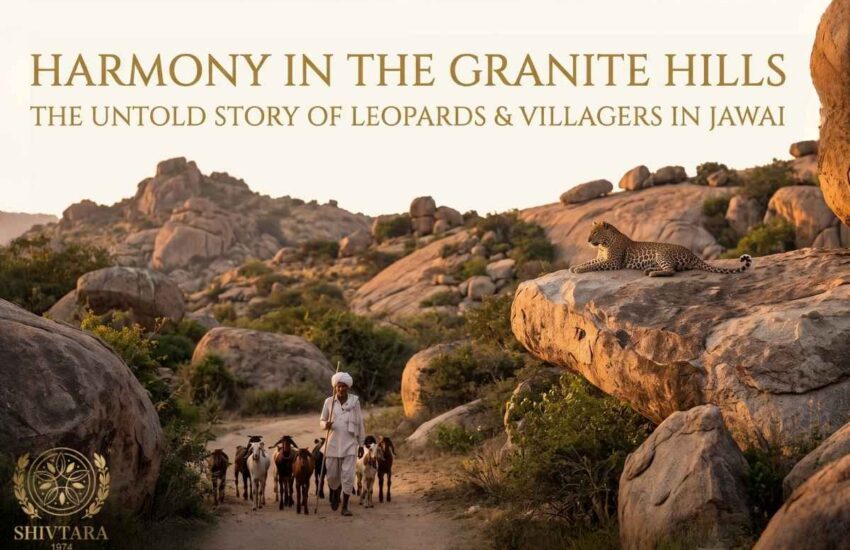
In wildlife conservation, the narrative is almost always the same: humans and apex predators cannot share the same space. We build fences, designate core zones, and create buffer areas to keep civilization and the wild strictly separated. When those boundaries are crossed, the result is usually conflict.
But in a small, rocky corner of Rajasthan, India, the rules of the wild have been rewritten. Here, in the granite hills of Jawai, leopards and villagers don’t just exist near each other—they live together.
This is the untold story of Jawai, where mutual respect and ancient traditions have forged an alliance between man and beast that defies modern understanding
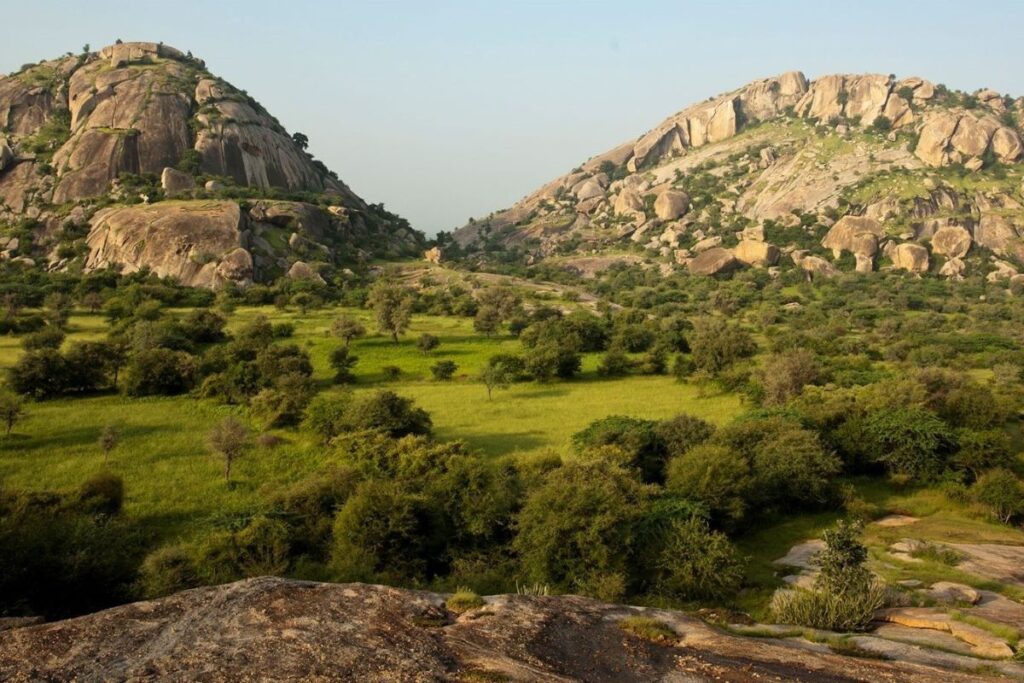
The unique granite terrain of Jawai. Source: Bkamprath / Getty Images
The Landscape: A Geology of Coexistence
To understand why Jawai is different, you first have to understand the land itself. Unlike the dense forests of Ranthambore or the vast grassy plains of the Serengeti, Jawai is defined by its massive, ancient granite rock formations. Over millions of years, wind and water have carved these hills into a labyrinth of deep caves, smooth plateaus, and hidden crevices.
These natural structures are perfect for leopards. The caves provide cool, secure dens for raising cubs, while the elevated rocks offer strategic vantage points to scan for prey. At the base of these same hills lie the villages, grazing lands, and the vast Jawai Bandh (dam) reservoir.
Because the landscape is open rather than densely forested, visibility is high. Humans can see the leopards, and the leopards can see the humans. This lack of ambush cover—a leopard’s usual hunting advantage—has forced a different kind of behavioral adaptation. In Jawai, stealth has been replaced by a quiet, mutual acknowledgment.
The Rabari Tribe: Shepherds of the Wild
The human side of this equation is anchored by the Rabari tribe. For centuries, this semi-nomadic pastoral community has walked these hills, herding their goats, sheep, and camels. Dressed in striking white garments with vibrant red turbans, Rabari herdsmen are as much a part of the Jawai landscape as the granite itself.
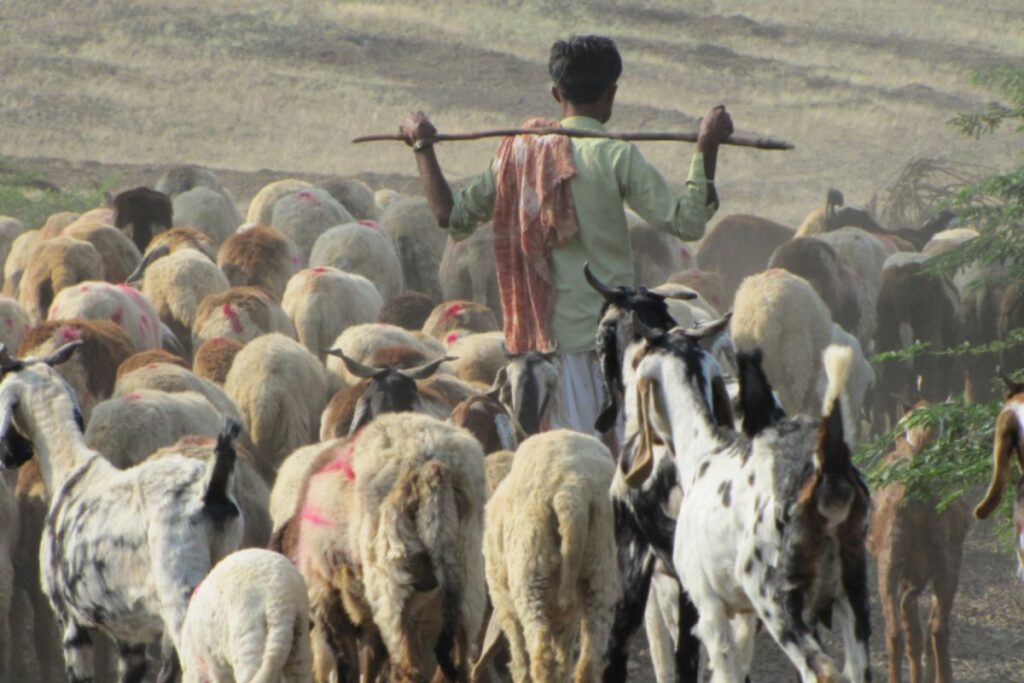
A Rabari shepherd moving with his flock. Source: Abhishek Mittal / Getty Images
In most parts of the world, a herdsman’s greatest enemy is a predator. If you are planning a First Time Leopard Safari in Jawai, you might expect to hear stories of villagers hunting leopards to protect their livelihoods. Yet, the Rabari do not carry weapons to hunt. They carry simple wooden staffs to guide their animals.
Their relationship with the leopards is deeply spiritual. The Rabari worship local deities, many of whose temples are situated right inside the granite hills—often in the very same caves the leopards use. To the Rabari, the leopards are not pests; they are the sacred guards of their gods.
When a leopard occasionally takes a goat or a sheep, the Rabari do not retaliate. They view the loss as an offering to the gods, a necessary tax for sharing the land. This profound tolerance removes the cycle of revenge that decimates predator populations elsewhere. Because the leopards are not hunted or harassed by the locals, they have lost their inherent fear of humans.
The Adaptation of the Jawai Leopards
The leopards of Jawai are behaviorally unique. In most wilderness areas, leopards are highly elusive, solitary, and strictly nocturnal. They go out of their way to avoid human contact.
In Jawai, the leopards have learned the rhythms of village life. They know when the herdsmen take their flocks out in the morning and when they return at dusk. It is not uncommon for villagers to see a leopard resting on a rock just a few hundred meters from their homes. The big cats often walk past temples while evening prayers are being sung, undisturbed by the ringing bells or the chanting.
If you want to experience this incredible dynamic firsthand, finding a Luxury Stay near Jawai Safari is essential. These properties not only offer comfort but employ local guides who understand the intricate movements of both the wildlife and the villagers. Staying in a Luxury Resort in Jawai often puts you right at the edge of this shared landscape, where you can watch the sunset over the granite hills and, if you’re lucky, spot a silhouette moving along the ridge.
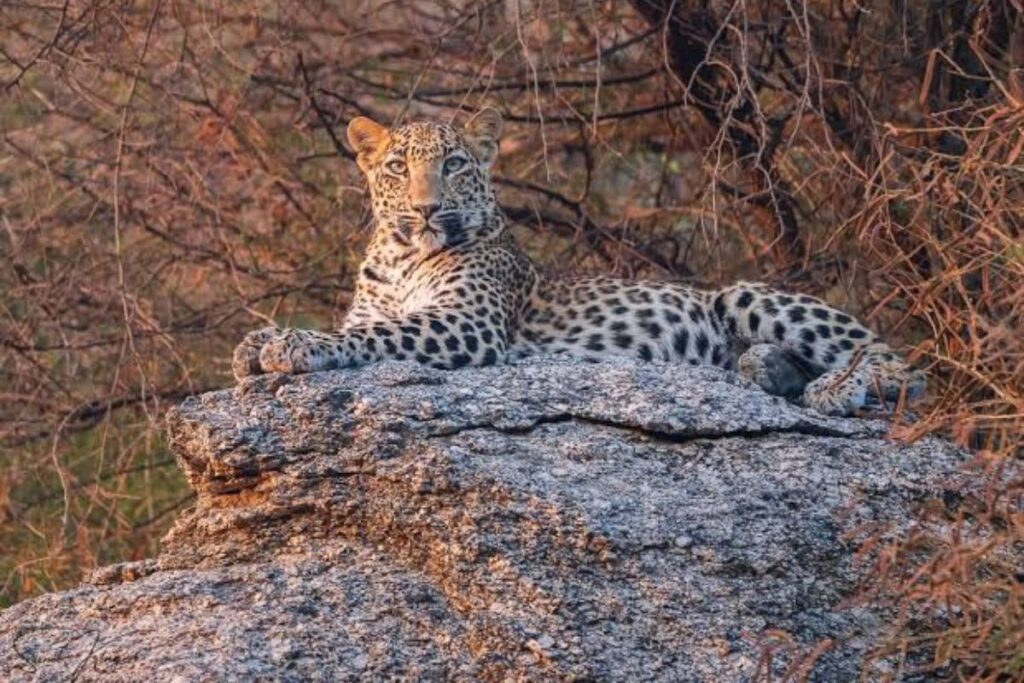
A leopard moving across the open granite rocks. Source: Bkamprath / Getty Images
Why Conflict Remains Low
The lack of human-leopard conflict in Jawai is a subject of fascination for conservationists worldwide. While the spiritual tolerance of the Rabari is the foundation, practical factors also play a role:
- Abundant Natural Prey: The area around the Jawai Bandh is rich in wildlife. Leopards have access to a healthy population of nilgai (blue bulls), wild boars, Indian hares, and peafowl. They do not need to rely solely on village livestock to survive.
- Predictability: The high visibility of the terrain means surprises are rare. When humans and leopards know where the other is, defensive attacks are minimized.
- Generational Knowledge: The knowledge of how to live together has been passed down on both sides. The older leopards teach their cubs that humans are not a threat, and the Rabari teach their children the same about the leopards.
Experiencing the Magic of Jawai
For travelers, Jawai offers a safari experience unlike any other in the world. It is less about the thrill of a chase and more about witnessing a profound ecological harmony.
When planning a trip, many wonder about the logistics of Jawai Safari Booking: Should you book through an agent or directly with a resort? Generally, booking directly through a reputable resort ensures that your guides are deeply integrated into the local community. They know the hills, they know the Rabari, and they know the individual leopards by name and territory.
Before you go, reviewing a comprehensive Rajasthan Leopard Safari Guide can help set your expectations. You aren’t just visiting a national park; you are visiting a living, working landscape.
A Lesson for the World
The untold story of Jawai is ultimately a story of hope. In an era where human expansion constantly threatens wildlife habitats, Jawai proves that coexistence is possible. It challenges the modern conservation paradigm that insists humans and nature must be kept apart to survive.
The harmony in these granite hills wasn’t created by government policies or fenced borders. It was built on centuries of patience, spiritual respect, and a deep understanding that the land does not belong to us—we belong to the land, right alongside the leopards.

